
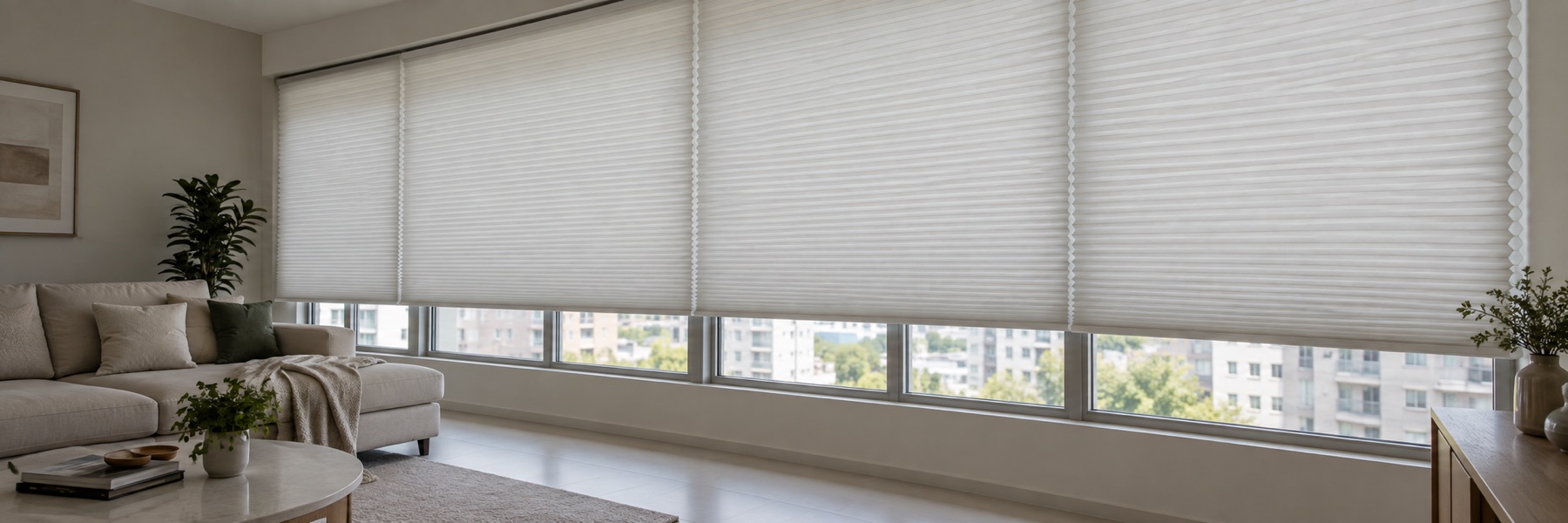
Quality honeycomb blinds in Singapore
About Honeycomb Blinds
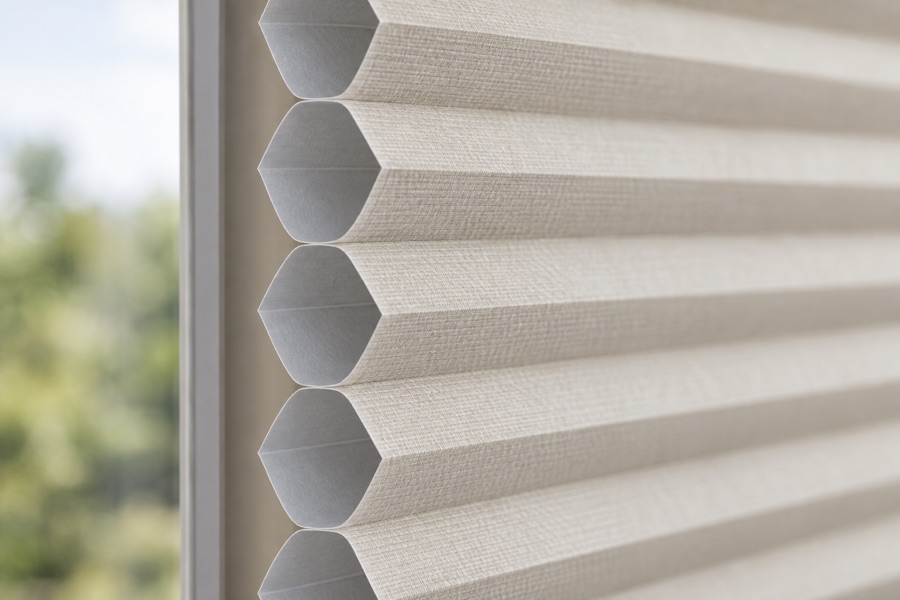
The cellular structure distinguishes honeycomb blinds from flat roller blinds and the layered folds of Roman blinds. Depending on the selected fabric, a honeycomb blind can filter daylight or provide darker coverage. The appropriate choice depends on the room, the amount of privacy required and how much natural light the customer wants to retain.
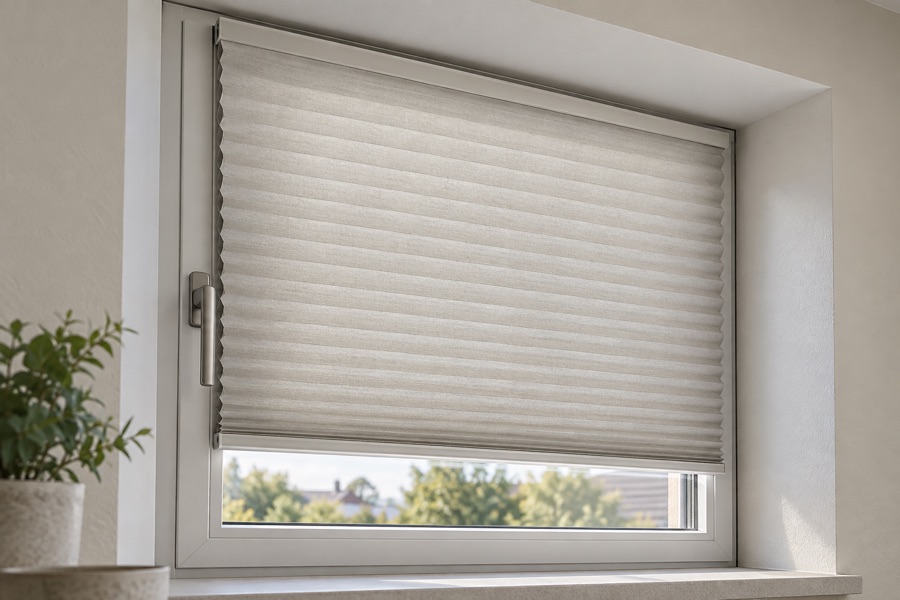
Honeycomb blinds are made to suit the measured opening. Window depth, handles, frame shape and mounting position must be considered so the blind has enough clearance to move and the edges sit as intended.
Measurement and Installation
Curtain World provides on-site measurement and professional installation. The team can inspect the window, discuss how the room is used and compare the available fabric options. Because cellular material looks different when light passes through it, viewing samples in the intended setting can help customers judge colour, texture and transparency more accurately.
Benefits of Honeycomb Blinds
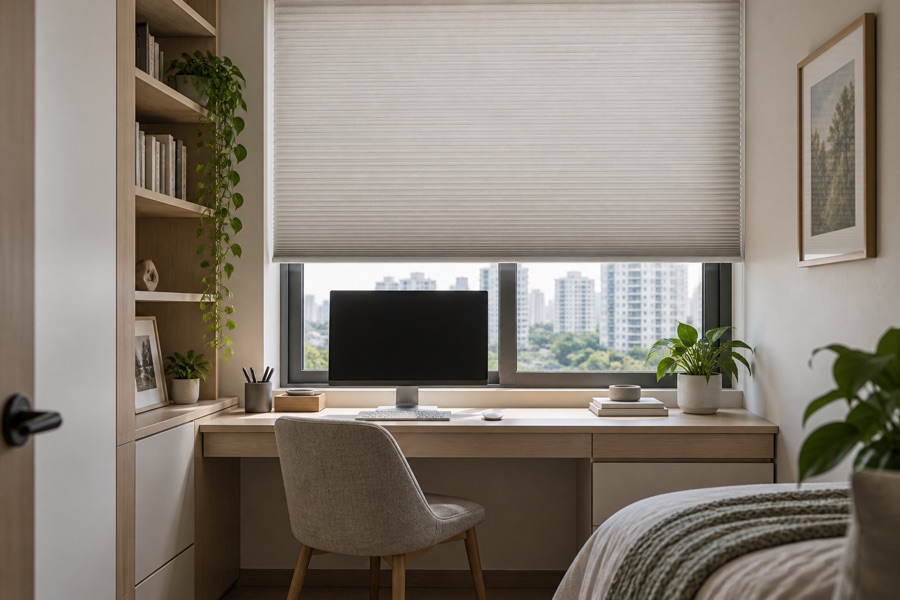
Honeycomb blinds combine the softness of fabric with the compact operation of a blind. The cells create a subtle horizontal texture without exposed slats, producing a streamlined appearance that works with both understated and more decorative interiors. When raised, the material gathers above the window rather than hanging at the sides like a curtain.
The pockets within the cellular structure create a layer of still air at the window. This construction can help reduce direct heat transfer through the covering, although the result will depend on the glazing, fit, fabric and conditions in the room. The blinds should be selected as part of the room’s overall approach to daylight and comfort rather than treated as a substitute for ventilation or air conditioning.
Different fabric choices allow the blind to serve different needs. Light-filtering material softens glare and maintains brightness, while room-darkening or blackout options provide stronger screening. Edge gaps and the mounting arrangement still affect how much light enters around the blind, so expected darkness should be discussed before ordering.
Light-Filtering Honeycomb Blinds
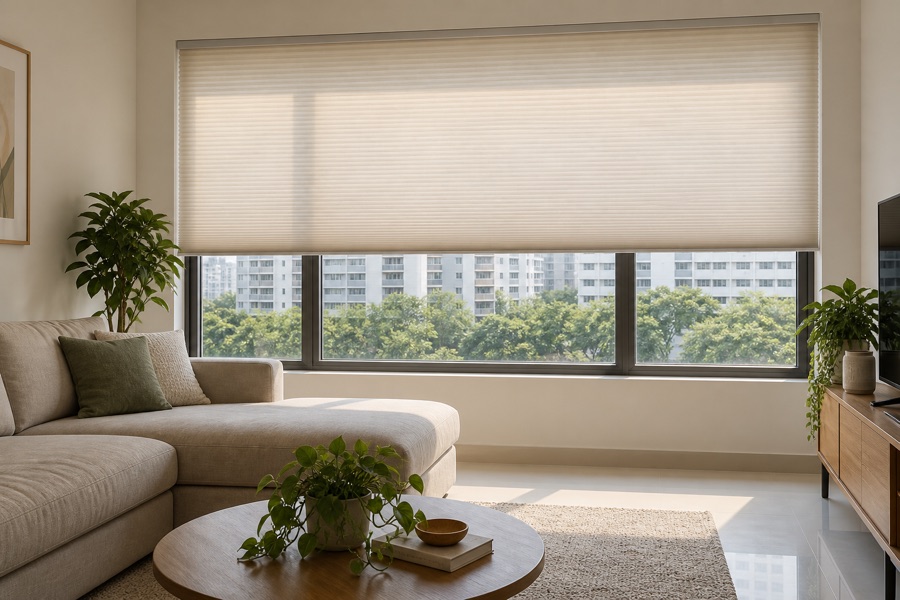
Light-filtering cellular fabric diffuses bright daylight and reduces harsh contrast at the window. It is suitable for living areas, studies and rooms that should remain naturally illuminated while gaining a degree of screening.
Privacy varies with fabric density and lighting conditions. A material that appears private during the day may reveal more when the room is lit after dark. Customers who need stronger evening coverage should compare the available room-darkening options or combine the blind with another suitable treatment.
Room-Darkening Options
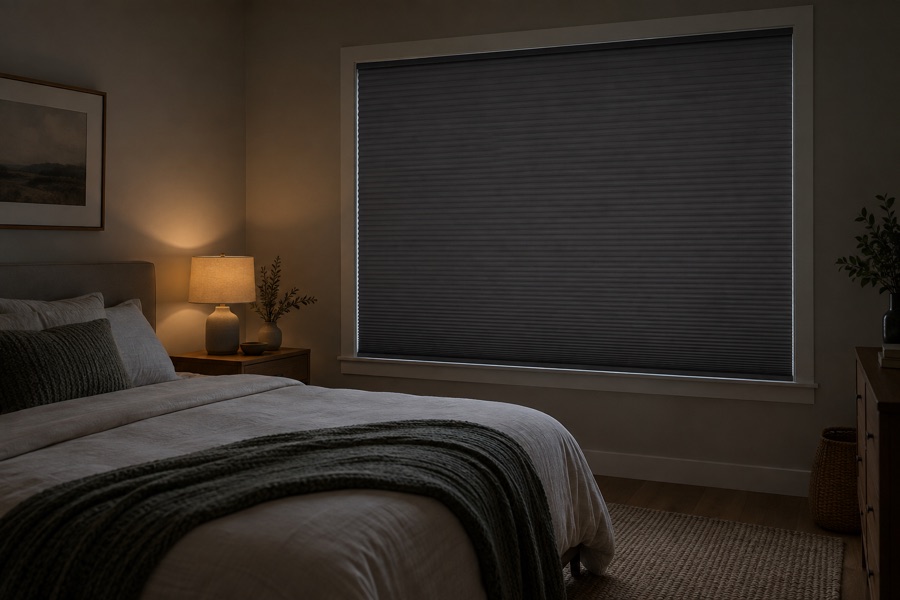
Denser cellular fabrics can provide stronger light control for bedrooms, media rooms and other spaces where reduced brightness is useful. The fabric may block or absorb more incoming light, while the cellular shape keeps the blind’s appearance soft and compact.
No inside-mounted blind can remove every possible edge gap. Where maximum darkness is the priority, the mounting position and overlap should be considered carefully, and blackout curtains may also be compared as an alternative.
Our Honeycomb Blinds
Curtain World supplies made-to-measure honeycomb blinds for suitable windows in Singapore homes and commercial interiors. Customers can select from the available colours and light-control options to complement bedrooms, living rooms, study areas and offices. The understated cellular pattern allows the blind to blend with modern interiors without appearing completely flat.
Honeycomb blinds are especially useful where a soft fabric finish is wanted but there is limited wall space for curtains to stack at the sides. They can also suit windows above desks or furniture, provided there is clear space for the blind to travel. On very wide or unusual openings, the team can assess whether one blind, multiple blinds or another product would operate more effectively.
The best result comes from matching the fabric and mounting method to the room. A light-filtering blind supports daytime brightness, while a darker option increases coverage. Samples and final measurements allow these choices to be confirmed before production and installation.
Honeycomb blinds can be compared with other window treatments according to the desired look. A roller blind has a flat sheet of fabric and rolls around a tube, creating a very simple surface. A Roman blind gathers into larger decorative folds, while a honeycomb blind forms smaller cells and a regular horizontal texture. Curtains extend beyond the window and introduce more fabric into the room. None is automatically better; the suitable choice depends on the opening, available space and visual effect.
Daily access is also important. Windows that are opened regularly need a blind that can be raised without interfering with handles or movement. Furniture, taps and worktops below the opening may affect how easily the blind can be reached. For several adjacent windows, individual blinds can give more flexible control, provided their edges and head positions are coordinated.
Care requirements vary with the fabric and mechanism. Regular light dusting helps prevent particles settling into the folds, while stains and deeper cleaning should be handled according to the instructions for the selected material. The cellular pockets should not be crushed or pulled out of shape. Curtain World can explain the appropriate operation and care guidance for the supplied blind after installation.
Colours and Cellular Texture
Pale colours can keep the window treatment visually light, while mid-tone or darker fabrics create a stronger frame around the opening. The folded cells add texture even when a plain colour is selected.
Fabric appearance changes with daylight, so a sample should be assessed both illuminated and unlit. Curtain World can show the available selection and explain which choices are intended for light filtering or stronger room darkening.
Made to Measure
Each blind is planned for the measured opening. Width, drop, recess depth and nearby window hardware are checked so the blind can sit and operate appropriately. The final mounting method is selected according to the site rather than assumed in advance.
Customers can begin with photographs and approximate dimensions, followed by an on-site measurement. Once the details and fabric are confirmed, the honeycomb blind can be prepared and professionally installed.

PRACTICAL INSTALLATION DETAILS
Planning your honeycomb blind installation
The product, opening and room need to work together. These details are considered before the final specification is confirmed.Recess depth and handles
We inspect the recess, frame and window hardware to decide whether the blind can sit inside the opening or should overlap it from outside.
Light-filtering or darker fabric
Cellular fabrics can soften daylight or provide stronger room darkening. The room, privacy needs and likely edge gaps guide the choice.
Compact, clear movement
The head position and blind width are planned so the cells fold into a compact stack and clear handles, desks and other nearby obstructions.
MEASUREMENT CHECKPOINTS
Details that affect fit and daily use
- Recess depth and frame shape
- Window-handle clearance
- Expected side gaps
- Light-filtering or room-darkening need
Discuss the opening before confirming the treatment
A site measurement can confirm dimensions, mounting conditions and the suitable operating arrangement.
Frequently Asked Questions
What makes honeycomb blinds different from roller blinds? | Our honeycomb blinds use folded fabric that forms cellular pockets and a regular horizontal texture, while roller blinds use a flat sheet that rolls around a tube. |
Can honeycomb blinds filter light or darken a room? | Yes. We can compare light-filtering cellular fabrics for softened daylight with denser room-darkening or blackout options for stronger coverage. |
Can honeycomb blinds be fitted inside a window recess? | We can use a recess mount where depth and clearance are suitable. For shallow recesses or greater overlap, we may recommend mounting the blind over the opening. |
Will honeycomb blinds remove every edge gap? | We advise that no inside-mounted blind removes every possible edge gap. We assess the mounting position and overlap, and can compare blackout curtains when maximum darkness is the main priority. |
How should honeycomb blinds be cared for? | We recommend regular light dusting and following the supplied fabric guidance for stains or deeper cleaning. The cellular pockets should not be crushed or pulled out of shape. |