
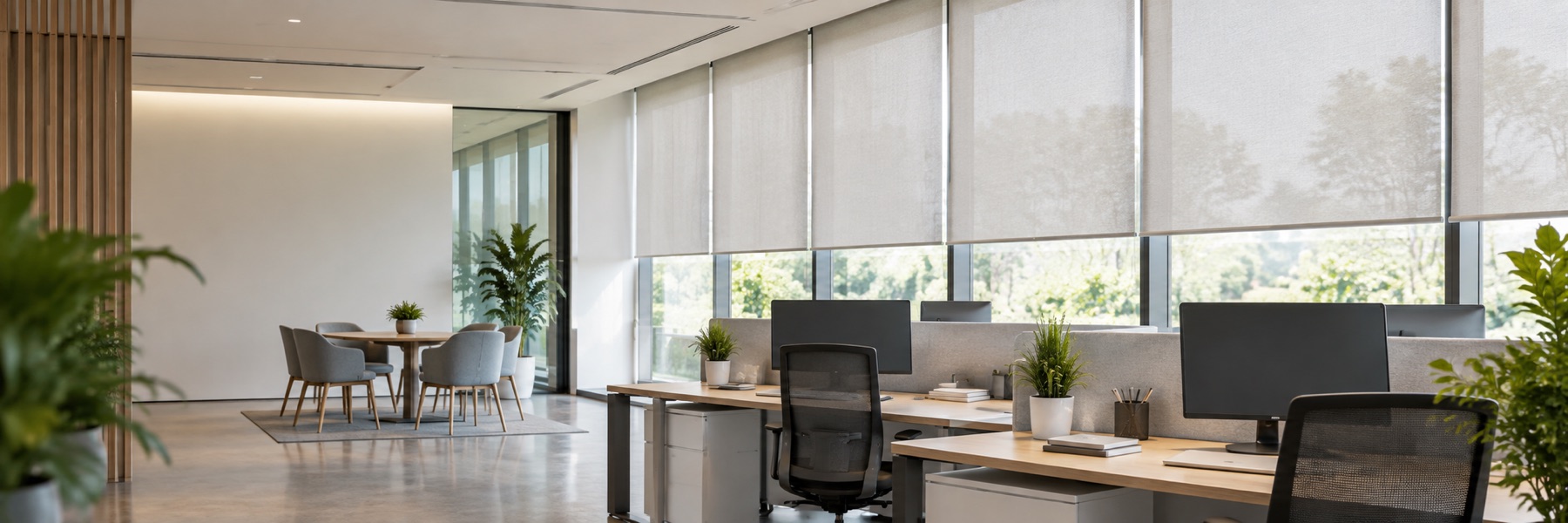
Quality office blinds in Singapore
About Office Blinds
Curtain World supplies and installs blinds for offices and other commercial properties in Singapore. Available choices include roller blinds, vertical blinds and Venetian blinds, together with fabric and operating options suited to different levels of light control. The aim is to select a system that works with the window, the room layout and the way employees and visitors use the space.
A well-chosen blind should be straightforward to adjust and visually consistent with the office interior. Colours and materials can be coordinated across related areas while allowing meeting rooms or sun-facing zones to use a different level of screening where needed.
Measurement and Installation
Curtain World provides on-site measurement and professional installation. During planning, the team can assess the direction of the light, the position of workstations and the privacy expected in each room. This helps avoid choosing a material that is too dark for general work or too open for a confidential meeting space.
Benefits of Office Blinds
Direct sunlight across computer screens can make reading difficult and cause employees to keep moving or adjusting their position. Office blinds provide a simple way to reduce that glare while maintaining control over how much daylight remains in the room. Sunscreen and light-filtering options can soften bright windows, whereas blackout materials are more suitable where a darker setting is required.
Blinds also support privacy. Street-facing offices, consultation rooms and meeting spaces may need visual screening at particular times without remaining closed throughout the day. Adjustable slats or independently operated rollers allow the covering to respond as conditions change.
From a design perspective, blinds give windows a consistent, finished appearance. A restrained colour can blend with the walls and furniture, and a carefully selected material can complement the wider workplace design. Because offices often include several types of space, the window treatment should be planned as a coordinated system rather than a single product applied without regard to room function.
Roller Blinds for Work Areas
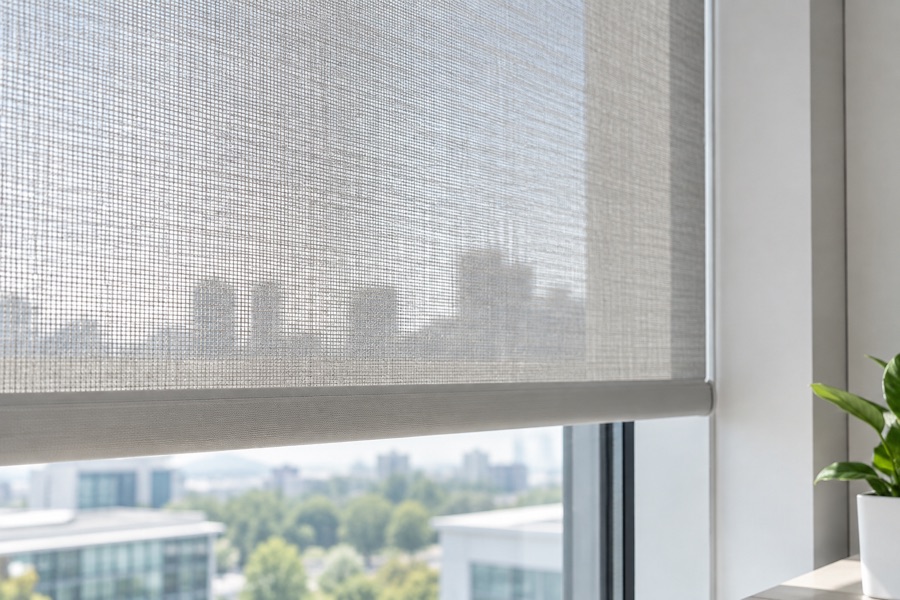
Roller blinds have a compact profile that suits many modern offices. They can be raised when a clear view is wanted and lowered to control glare or privacy. Available fabric categories include sunscreen, translucent and blackout choices, allowing the degree of coverage to be matched to the room.
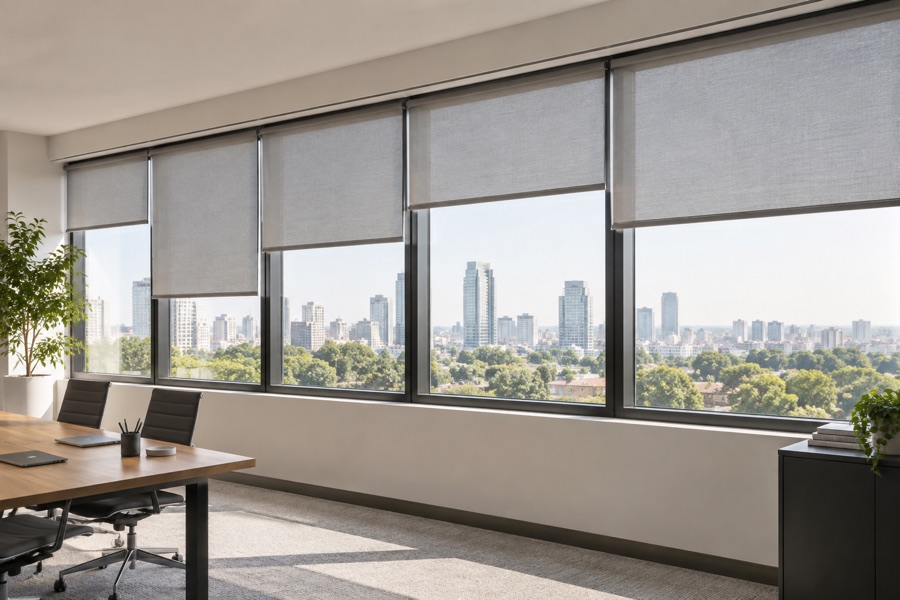
For wide glazing, separate rollers can provide more flexible control than one large covering. Selected roller systems can also be motorised where easier operation is required.
Vertical and Venetian Blinds
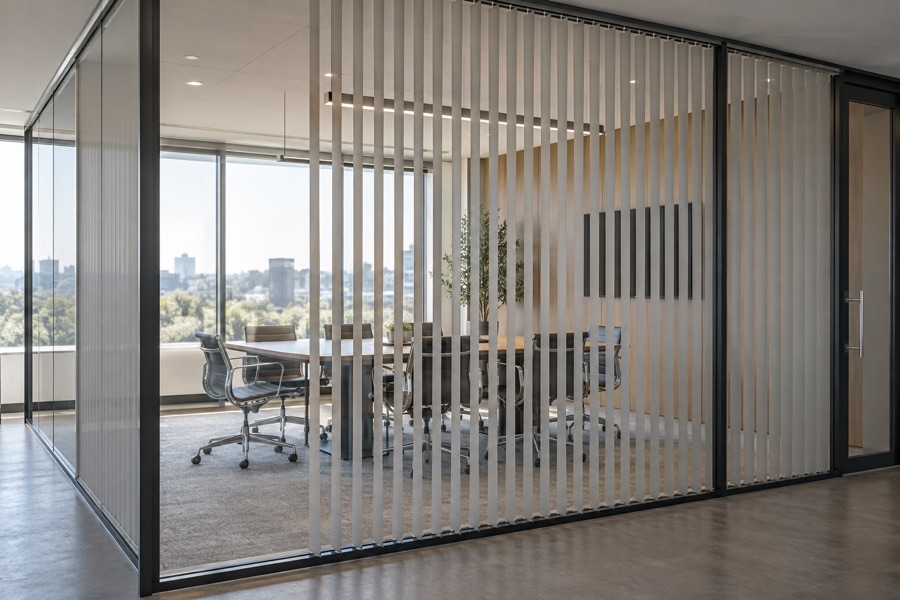
Vertical blinds are useful for broad windows and openings because their vanes can be rotated to redirect light or drawn to the side. Individual panels can create an orderly rhythm across long expanses of glass.
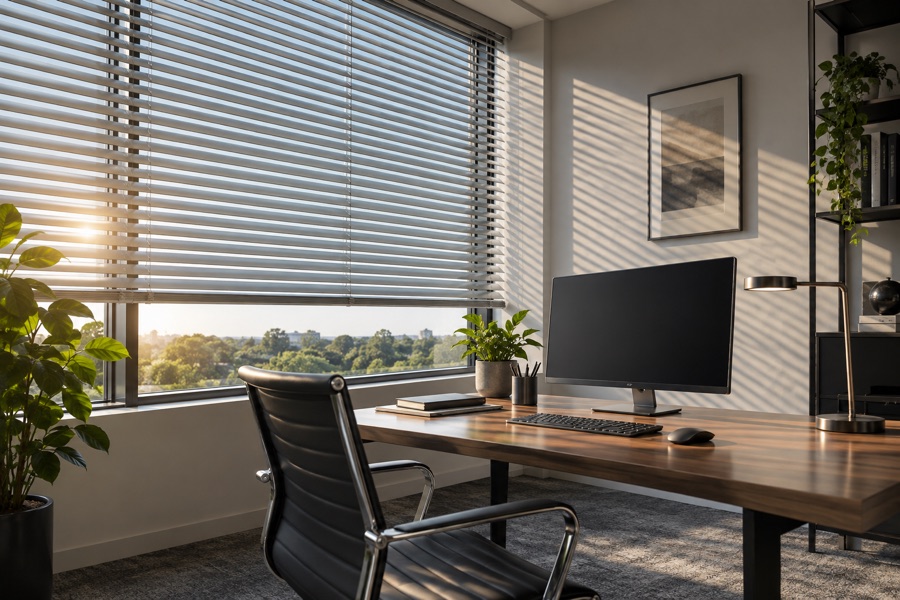
Venetian blinds use horizontal slats that tilt to fine-tune light and privacy. Aluminium, PVC and timber-style appearances can produce different visual effects. Their adjustable nature makes them useful in offices where sunlight changes during the working day.

Choosing Blinds for Each Office Area
Open-plan workspaces generally benefit from glare reduction without losing all natural light. A sunscreen roller blind can screen the strongest sunlight while keeping the room from feeling enclosed. Private offices and consultation rooms may need a more opaque material, particularly when windows face public corridors or neighbouring buildings.
Meeting and presentation rooms require separate consideration. If a display or projector is regularly used, blackout roller blinds or blackout curtains can provide stronger light control. Reception and customer areas may place more emphasis on appearance, making Roman blinds, day curtains or a carefully selected blind texture suitable alternatives.
The condition of the opening matters as much as the room name. Window width, sun direction and nearby fittings can change which system will operate most comfortably. A site assessment allows those details to be considered before the final choice is made.
Workstation placement deserves particular attention. A blind may need to control low morning or afternoon sun without leaving the entire office dark. Adjustable Venetian or vertical slats can redirect light, while sunscreen rollers create a more uniform screen across the window. Where several employees share a long bank of glazing, dividing the covering into practical sections can allow one area to respond without changing every blind on the wall.
Meeting rooms often alternate between conversation, video calls and screen presentations. Light-filtering coverage may be adequate for normal meetings, but a darker roller or curtain can be more appropriate if projected content is used frequently. Reception areas can take a different approach, using the window treatment to soften daylight and support the first impression of the workplace.
Operation and upkeep also affect the decision. Frequently adjusted blinds should remain easy for staff to use, and the material should suit the cleaning routine of the premises. Cord, chain, manual and motorised arrangements each have different practical considerations. During consultation, the available choices can be reviewed alongside the window dimensions and expected daily use so the finished office blinds remain useful after installation, not merely tidy on the first day.
Fabric and Colour Selection
Light-filtering fabrics help soften bright windows, sunscreen materials manage glare while retaining some outward visibility, and blackout fabrics provide fuller coverage. The precise effect depends on the selected material and conditions at the window.
Neutral greys, creams and darker tones can integrate quietly with office interiors. Samples should be viewed against the actual walls and furnishings because colour and transparency can appear different under natural and artificial light.
Office Blind Consultation
Curtain World can discuss office blinds for individual rooms or properties with multiple windows. Photographs, approximate dimensions and a floor plan can help identify initial options before an on-site measurement confirms the fit.
The final recommendation can account for daily use, desired privacy and the amount of sunlight reaching each area. Once confirmed, the blinds are prepared for the measured openings and installed by the team.

PRACTICAL INSTALLATION DETAILS
Planning your office blind installation
The opening, product and operating needs are considered together before the final specification.Sun direction and workstations
We look at when direct light reaches screens and how employees use each area before selecting the degree of glare reduction.
Wide glazing and room divisions
Long banks of glass may be divided into several blinds so one area can change without altering every window covering.
Privacy and presentation needs
Open work areas, meeting rooms and reception spaces can use different fabrics or blind types while maintaining a coordinated workplace finish.
Measurement checkpoints
- Screen positions and changing sunlight
- Meeting-room privacy
- Width and practical blind divisions
- Sunscreen, translucent or blackout fabric
Frequently Asked Questions
Which office blinds help reduce screen glare? | We commonly compare sunscreen roller blinds with adjustable Venetian or vertical blinds, depending on the sun direction, workstation positions and amount of daylight the office should retain. |
Can meeting rooms have stronger light control? | Yes. We can consider blackout roller blinds or blackout curtains for rooms that regularly use displays or projected content. |
How are blinds planned for wide office glazing? | We may divide wide glazing into several blinds so each section remains manageable and employees can adjust one area without changing every blind on the wall. |
Should an office use vertical or Venetian blinds? | We compare the opening and daily use. Vertical vanes suit broad windows and draw sideways, while Venetian slats provide precise adjustment of light and privacy. |
Can office blinds use motorised operation? | We can discuss motorised roller blinds where wide windows, high openings or frequently adjusted groups would benefit from powered control. |